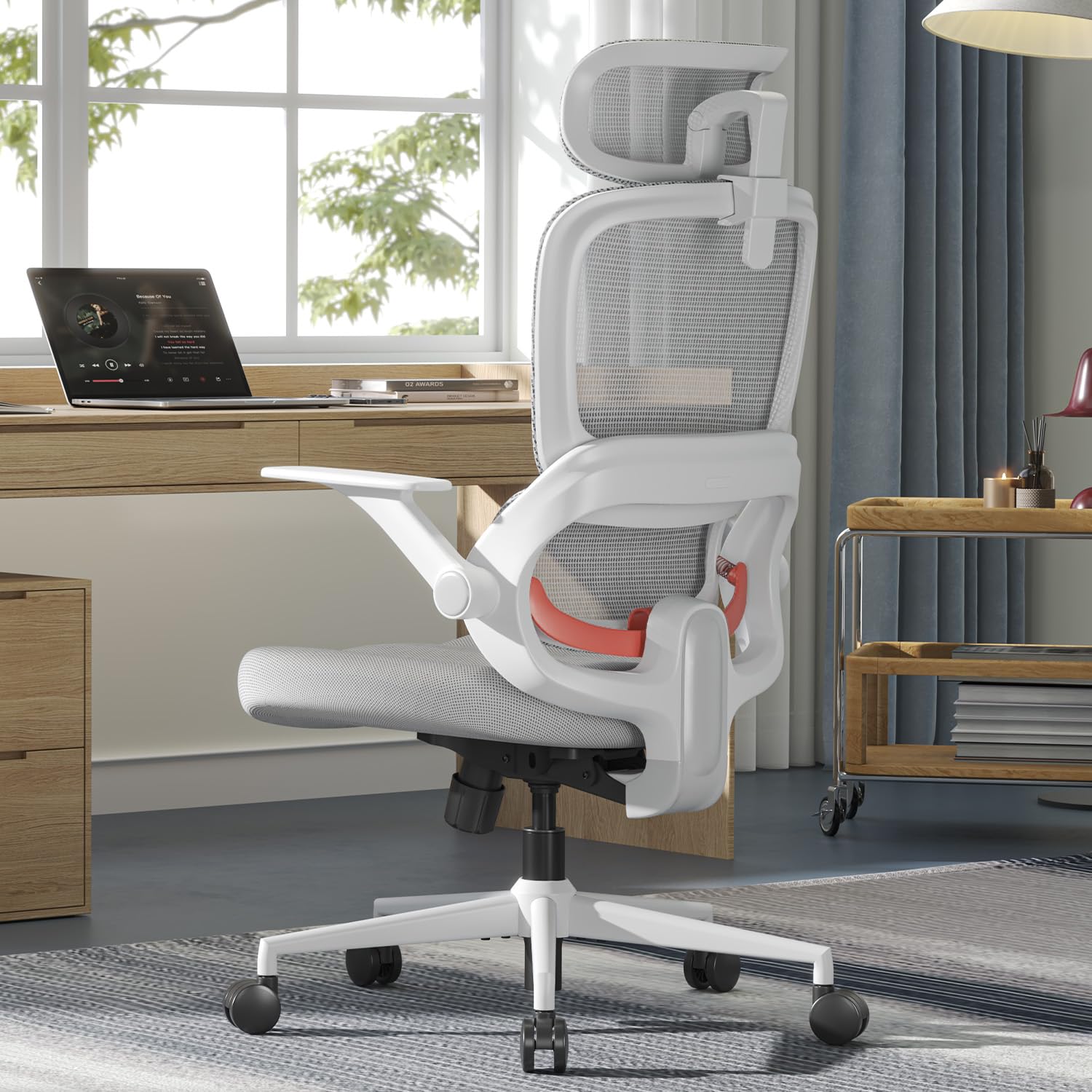
The SIHOO B300 PRO is a mesh office chair built around extensive adjustability, including a spring-assisted lumbar system, movable backrest, and deeply configurable armrests.
This sihoo b300 pro review looks at how those features may suit people who spend long stretches at a desk and want to fine-tune their sitting position.
SIHOO B300 PRO Review Summary
The quick verdict
17,000+ ratings
Read Amazon ReviewsSIHOO B300 PRO
A strong fit for desk workers who want adjustable lumbar support, seat depth, and arm positioning, with a mesh seat and no footrest.
- Spring-assisted 4-way lumbar support adjusts in height, glides forward independently, and flexes with movement.
- Independently height-adjustable backrest lets the user change where lumbar support meets the spine.
- Adjustable seat depth is intended to accommodate different leg lengths; the seat uses breathable mesh.
- Weight-sensing recline is designed to match resistance to the user’s body weight.

Pros
- Lumbar support combines height adjustment, forward travel, and flexible movement.
- Backrest height and seat depth adjustments give buyers more ways to tune the chair to their proportions.
Consider before buying
- The wide range of adjustments may take time to configure; buyers should be comfortable making several fit changes.
- This model is specifically listed without a footrest, so it may not suit buyers who want leg support built into the chair.
Read the full review summary
The B300 PRO’s main appeal is the number of ways it can be adjusted around an individual sitter.
Its lumbar support changes height and moves forward independently, while the backrest itself adjusts in height and the seat depth can be changed to better suit different leg lengths.
The mesh seat, weight-sensing recline, large adjustable headrest, and 6D armrests round out a design intended to support both upright desk work and reclining breaks.
This setup is most compelling for people who tend to shift posture through the day or share a chair among users with different proportions.
It is also worth considering for buyers who want a headrest and flexible arm positioning but do not need an integrated footrest.
Because several ergonomic details depend on personal fit, the adjustment range matters more here than a long feature list: check that the seat depth, backrest height, and arm positions align with your desk and body before choosing.
The buying factors
SIHOO B300 PRO Scorecard
Editorial scores reflect listed features and buyer fit; they are not laboratory measurements or customer ratings.
Lumbar adjustability
Height adjustment, independent forward movement, and spring-assisted flex give the lumbar system several ways to follow posture changes.
Backrest fit
The independently height-adjustable backrest gives users another way to position support along the spine.
Seat flexibility
Adjustable depth and a breathable mesh seat make fit across different leg lengths a clear part of the design.
Arm support options
The 6D armrests rotate, slide, lift, and flip up, offering broad positioning flexibility.
Recline adaptability
Weight-sensing recline is designed to match resistance to the sitter’s weight without manual tension adjustment.
Relaxed sitting support
An oversized adjustable headrest adds neck support for reclining, reading, or video calls.
Buyer confidence
The chair is described as tested to BIFMA, SGS, and TÜV standards and includes a three-year warranty and 30-day return period.
Key Features and Specifications of SIHOO B300 PRO
- Spring-assisted 4-way lumbar support adjusts in height, glides forward independently, and flexes with movement.
- Independently height-adjustable backrest lets the user change where lumbar support meets the spine.
- Adjustable seat depth is intended to accommodate different leg lengths; the seat uses breathable mesh.
- Weight-sensing recline is designed to match resistance to the user’s body weight.
- Oversized 3D headrest and 6D armrests provide multiple adjustment points for neck, shoulder, and arm positioning.
- The chair is described as meeting BIFMA, SGS, and TÜV standards, with a three-year warranty and 30-day return policy.
Pros and Cons of SIHOO B300 PRO
Pros
- Lumbar support combines height adjustment, forward travel, and flexible movement.
- Backrest height and seat depth adjustments give buyers more ways to tune the chair to their proportions.
- Highly configurable armrests can change position for typing, creative work, or other sitting postures.
- Mesh seating and weight-sensing recline support a design intended for varied positions during the workday.
- An adjustable headrest and stated warranty add useful comfort and ownership considerations.
Consider before buying
- The wide range of adjustments may take time to configure; buyers should be comfortable making several fit changes.
- This model is specifically listed without a footrest, so it may not suit buyers who want leg support built into the chair.
- The design’s fit depends on how its seat depth and backrest height line up with your body and desk, so checking your workspace dimensions is prudent.
Who Should Buy SIHOO B300 PRO?
Good fit
Consider the B300 PRO if you spend much of the day at a desk and want to adjust several contact points rather than rely on a mostly fixed chair.
Its moving lumbar support is the centerpiece, but the independent backrest height and adjustable seat depth matter just as much for getting the support into a useful position.
If you often change between upright focus and a more relaxed lean, the weight-sensing recline is another potentially useful part of the setup.
It may also suit a shared workspace, since backrest height and seat depth can be altered for different users.
Before buying, compare your usual seated position with your desk height and preferred arm placement, and consider whether you want an all-mesh seat.
The headrest and 6D arms offer extensive adjustment, but they are most valuable when their range corresponds to how you actually work or relax.
Who should skip it
Skip this chair if an integrated footrest is a firm requirement. The B300 PRO is the no-footrest version, so buyers who regularly extend their legs while reclining should look for a chair designed with that support.
A simpler chair may be a better fit if you prefer minimal controls or do not plan to adjust your lumbar support, seat depth, backrest, and arm positions.
This model’s value is closely tied to using those adjustments to get a personal fit.
How the SIHOO B300 PRO Fits a Full Workday
Lumbar support that can move with posture
The spring-assisted lumbar system adjusts vertically and moves forward independently, while also flexing as the user shifts.
That combination gives more scope to align support with the lower back than a fixed pad would, though the practical result depends on setting its position to match your posture.
The backrest’s separate height adjustment further helps position the support relative to the spine.
Seat depth and mesh feel
Seat depth adjustment is useful when a fixed seat leaves too much or too little space behind the knees.
The mesh surface also makes this chair a different choice from a padded upholstered seat; buyers who like a firmer, more open-feeling surface may appreciate that design, while personal comfort preferences should guide the decision.
Reclining and upper-body adjustments
The weight-sensing recline is designed to tune resistance to body weight, so the transition between upright work and leaning back does not rely on manual tension changes.
The oversized 3D headrest and 6D armrests add further options for supporting the neck and arms.
These features make the chair adaptable across activities, but users should check whether the arm positions work with their desk and whether a headrest fits their preferred posture.
Warranty and practical fit checks
The chair is described as tested to BIFMA, SGS, and TÜV standards and includes a three-year warranty and a 30-day return period.
Those terms are useful context for a substantial ergonomic purchase, though they do not replace checking the chair’s physical fit.
Confirm the seat and arm positioning suit your workstation, and remember that this model does not include a footrest.
Alternatives to SIHOO B300 PRO
Home Office Desk Chairs alternative
17,000+ ratings
Read Amazon ReviewsSIHOO M57
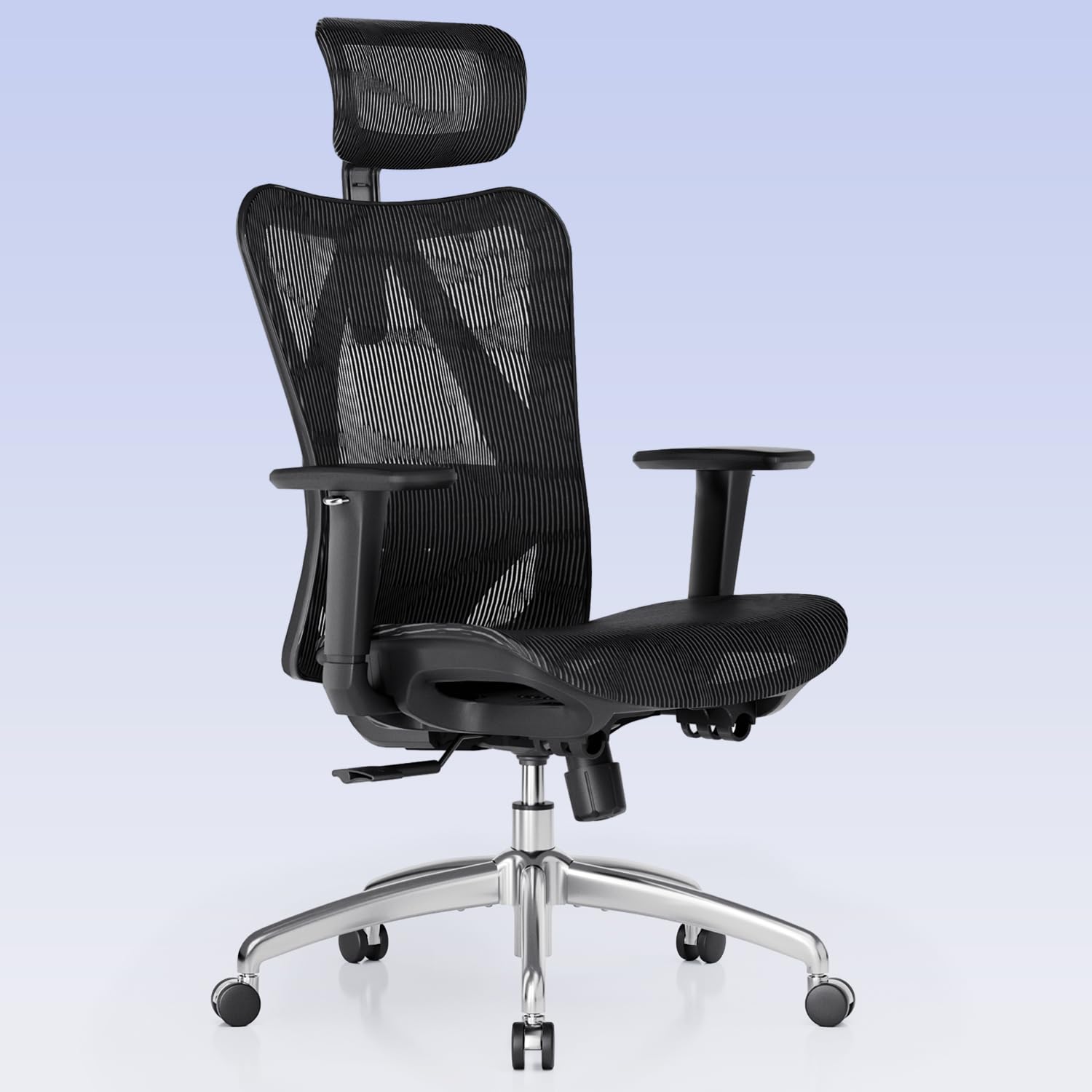
Choose the B300 PRO if seat-depth adjustment and more armrest movement are priorities. The M57 may be a closer fit if its split backrest and specified recline range better match the way you prefer to sit.
- The M57 offers lumbar support that shifts in height and depth, a split backrest, 3D armrests, and a recline range described as 90° to 126°.
- The B300 PRO emphasizes multi-directional lumbar movement, adjustable seat depth, an independently height-adjustable backrest, and 6D armrests.
Home Office Desk Chairs alternative
17,000+ ratings
Read Amazon ReviewsSIHOO B100
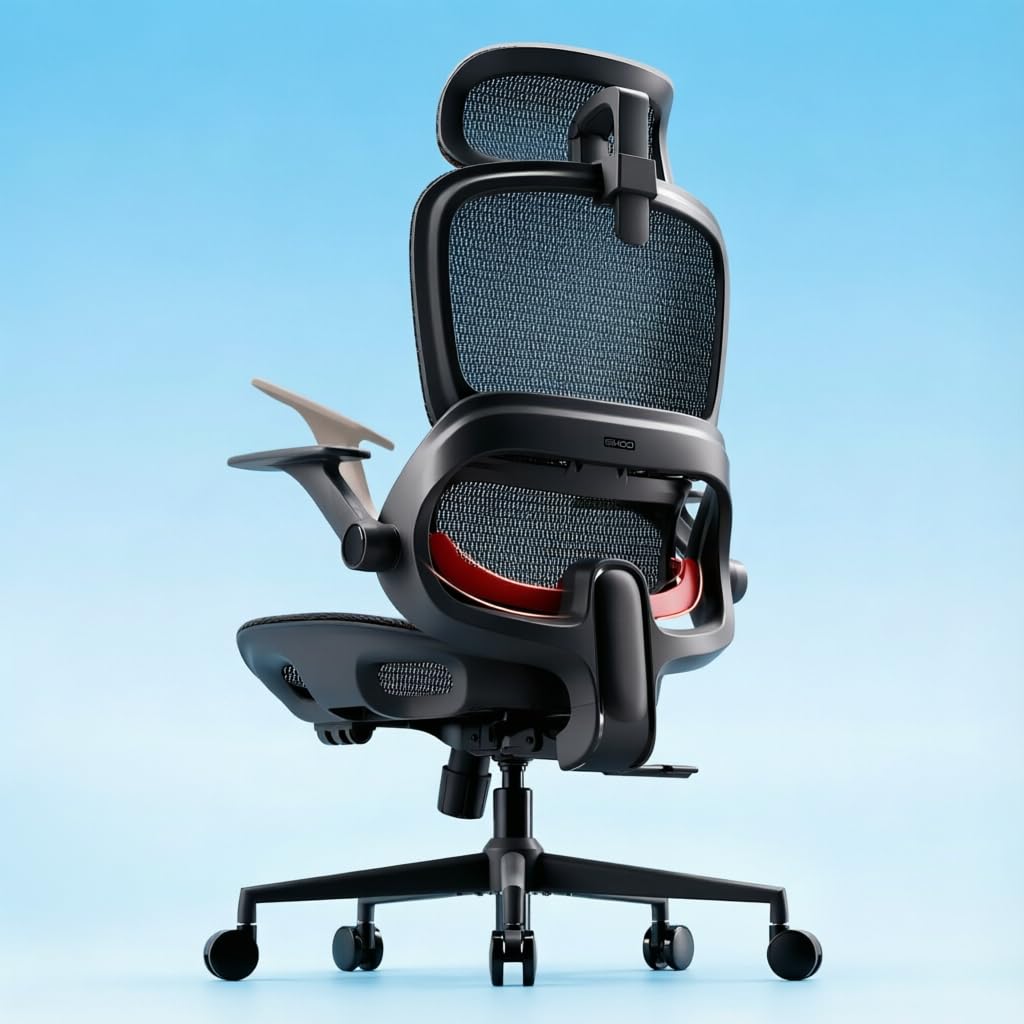
The B100 is worth comparing if you want flip-up arms and defined recline positions in a more straightforward adjustment setup.
The B300 PRO is the stronger match when fine-tuning seat depth, backrest height, lumbar position, and arm placement is the main goal.
- The B100 features full-mesh construction, three recline angles, a 2D headrest, and flip-up armrests; its description lists support up to 300 pounds.
- The B300 PRO has adjustable seat depth, a height-adjustable backrest, and 6D armrests, with lumbar support that moves forward independently.
Is SIHOO B300 PRO Worth It?
The SIHOO B300 PRO is worth considering for buyers who want a highly adjustable mesh chair with a moving lumbar system, variable seat depth, and extensive arm positioning.
Its feature set is geared toward dialing in fit across different postures, and the adjustable headrest and weight-sensing recline add support for breaks as well as focused work.
Buy it if you expect to use those adjustments and do not need a built-in footrest.
Check how the seat depth, backrest height, and arms line up with your body and desk before committing; if you prefer simpler controls or need integrated leg support, another chair design may suit you better.
Your review at a glance
17,000+ ratings
Read Amazon ReviewsSIHOO B300 PRO
A strong fit for desk workers who want adjustable lumbar support, seat depth, and arm positioning, with a mesh seat and no footrest.
- Spring-assisted 4-way lumbar support adjusts in height, glides forward independently, and flexes with movement.
- Independently height-adjustable backrest lets the user change where lumbar support meets the spine.
- Adjustable seat depth is intended to accommodate different leg lengths; the seat uses breathable mesh.
- Weight-sensing recline is designed to match resistance to the user’s body weight.